PnP Review, Review

Let’s Review More: Call the Doctor

1 Player

Designer: Radosław Ignatów

Artist: Michał Teliga

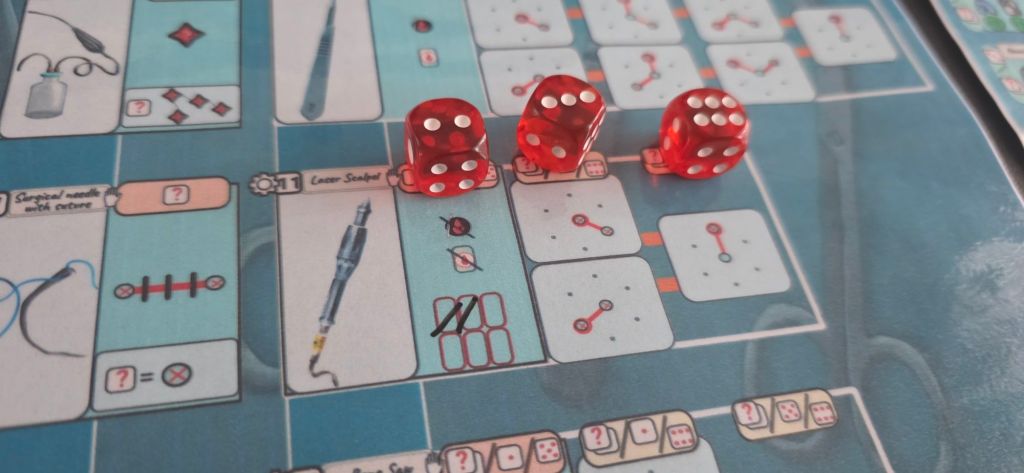
Call the Doctor brings you to the surgery table, managing your patient’s vitals, using medicine, procedures and tools to solve your case. But is this a healthy game or does it just flatline?

How to Play

MRI! STAT! MORE MEDICAL JARGON!

Each turn, you roll your dice and get a new situation card. Then you use the dice for various aspects. You can apply medication, which will change stats, activate and use tools for the needed procedures, or use other procedures to prevent or fix critical conditions.
This is quite a complex game to explain simply, but each case you take on has the needed steps to save the patient, involving usually different parts of surgery. But every step you take has implications on other stats.

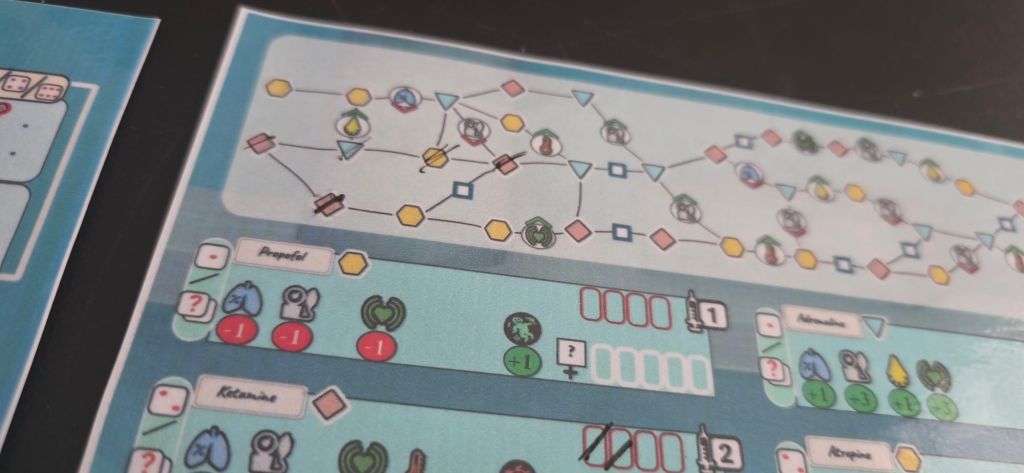
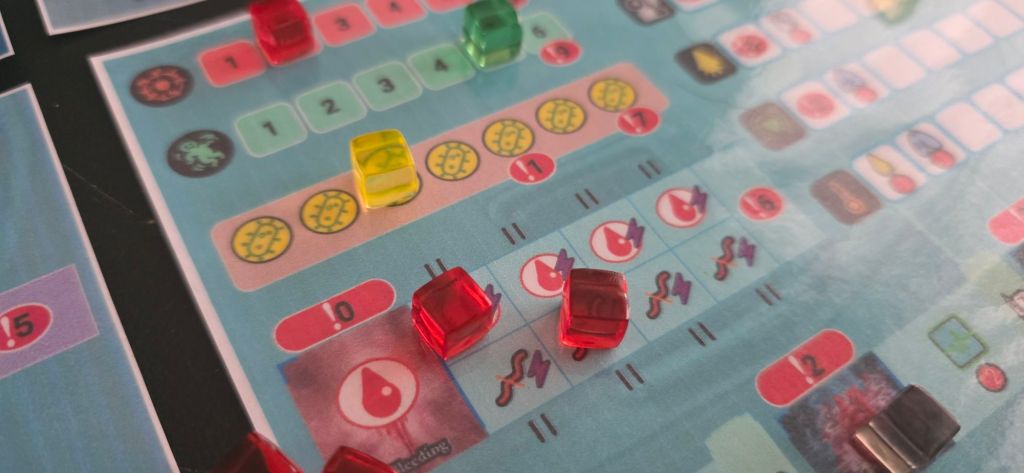
One of the most interesting aspects in this game is that most stat changes are not applied directly. There is a prognostic card where you make the changes, and all are applied at end of turn. That gives you time to counteract. But let the changes be too radical and there will be consequences.

Gameplay

Number D6 Scalpel!

If you’re familiar with Radosław’s previous designs, you’ll be half familiar here. It has his traditional mix of lots of tracks and things that affect things that affect things sort of chains.

But this time instead of exploring and maximizing combos and interactions, you’re managing them. It’s a slow paced game, where some turns are active and advance you towards your goal, others are just avoiding harsher consequences.

I’m going to talk about theme later, but from a purely gameplay perspective, it’s a fascinating take on his style. It still feels just as rewarding and intricate, but shows a new aspect of analysis.

Score: 9/10

Rules and Components

What’s the right medication for brain burn?

One constant issue with Radosław’s previous games has been the rule books. And, honestly, I can appreciate the challenge. Often Aspect A depends on Aspect B, Aspect B depends on A. So things are mentioned before they are fully explained.

There is significant improvements here. There are lots of references to where something is detailed as other rules are explained. And the usage of examples helps a lot. But there are still some areas that are initially counter intuitive or need to be derived. One simple example is that initial values are never really mentioned, but need to be consulted from the component diagram.

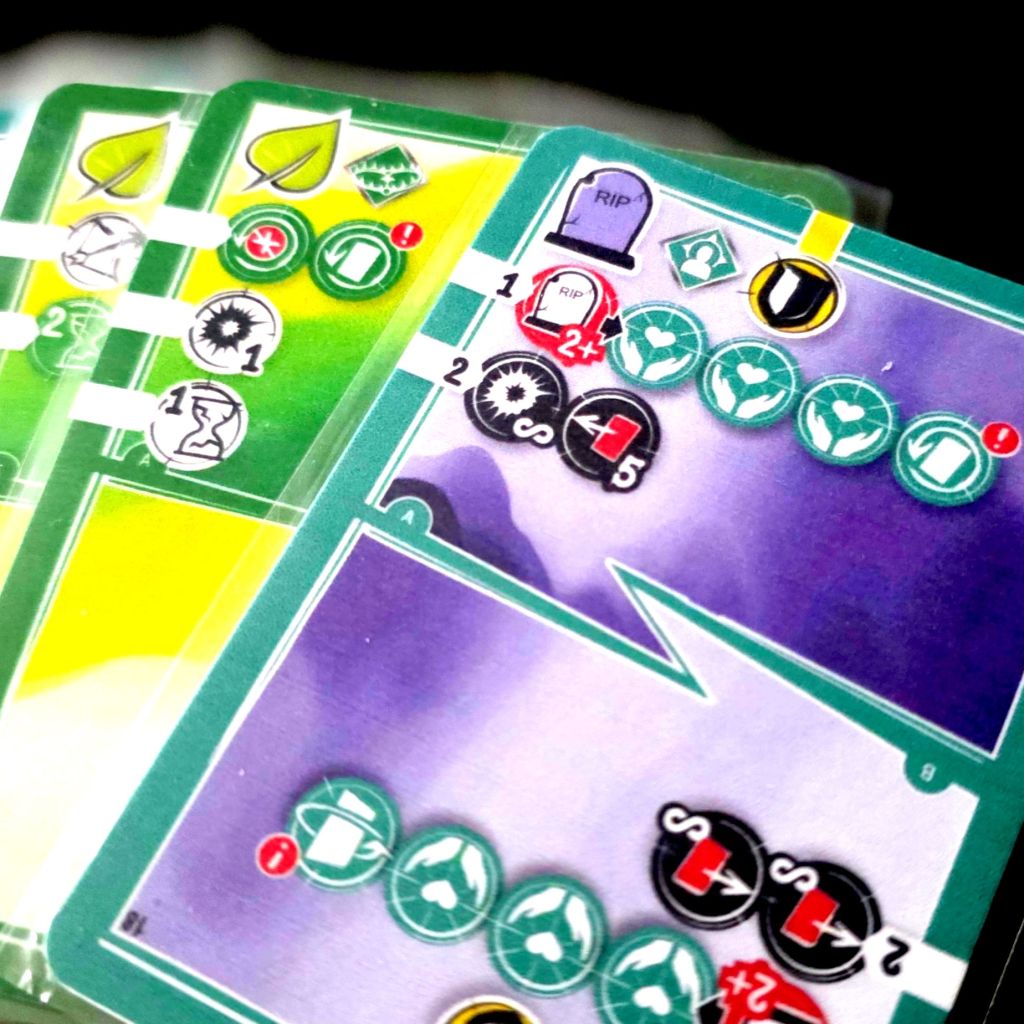
Components are good and functional though. The symbols can get a bit small and cramped, specially in the procedures, but nothing that affects gameplay too much.

Score: 7/10

Theme and Art

I’m bleeding me!

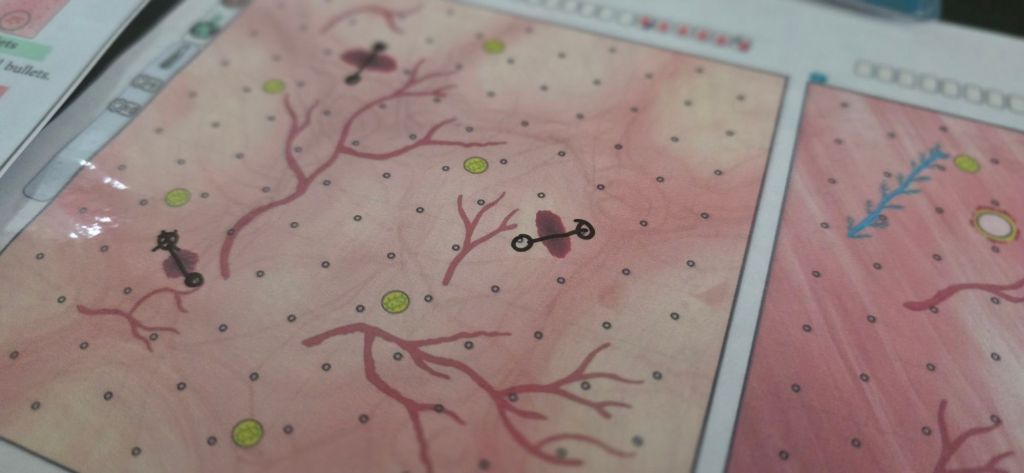
The main sheets are, while function, a bit lacking in terms of theme. There are illustrations, but these are either quite small or background. The case cards, on the other hand, are super well illustrated and thematic, giving you a real feel of the operations you’re performing.

But while the visuals are only partially evoking, what you’re actually doing feels incredibly thematic and immersive. Cuts bleed, medications have side effects, procedures take time and preparation. Even the pace of the game feels appropriate. Patient care strikes that balance between race against the clock and methodical and deliberate approach.

Score: 9/10

Conclusion

Snitches get stitches. And appropriate health care

Call the Doctor is more than a thematic game, it’s a tribute to health workers. A lot of effort was put into the details, the correct effects and side effects, the complexity of the human body. Every rule is tied to a real life aspect of medicine, clearly laid out in the rules.

If you are interested in the theme, you will appreciate everything Call the Doctor brings to the (operating) table. But all of that is backed by a complex, yes, but elegant implementation of the rules that elevates the experience.

It’s an immersive and intense game that takes its time to allow, and in a way force, the player to see the big picture and navigate each case in an unique manner.

Score: 8/10

Top 5

Top 5: Solo Games with Just a Poker Deck

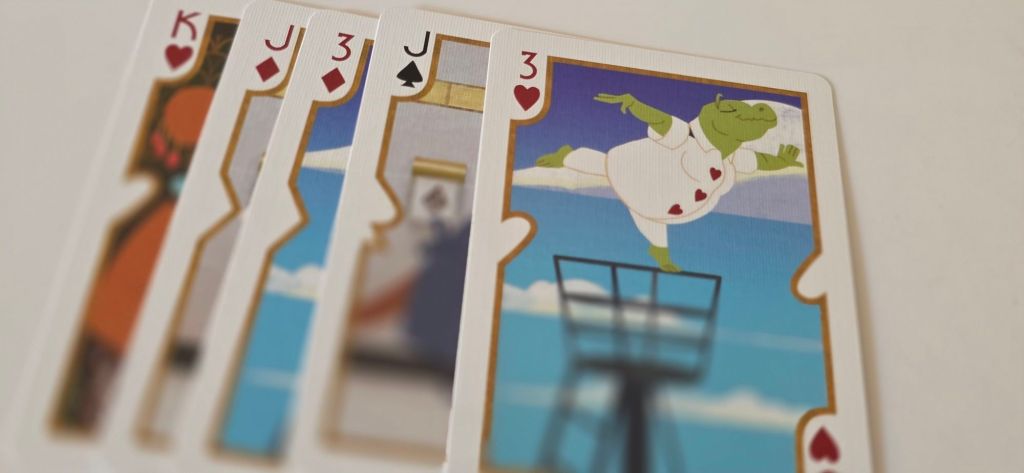
I’ve got into a craze last year, which are games played with your every day 52 card 2 joker poker deck. Everyone pretty much has ones of these laying around somewhere in your home, but that does not mean you cannot be gaming.

Because I’m mostly a solo gamer, I am just doing solo on this list. These games have to playable with an unmodified deck, and need no other components whatsoever. However, I will allow reference cards, as long as they are not part of the game itself and you could just use an online reference or whatever.

5 – Regicide

By Paul Abrahams, Luke Badger and Andy Richdale

Kill the King, Tear Him Down!

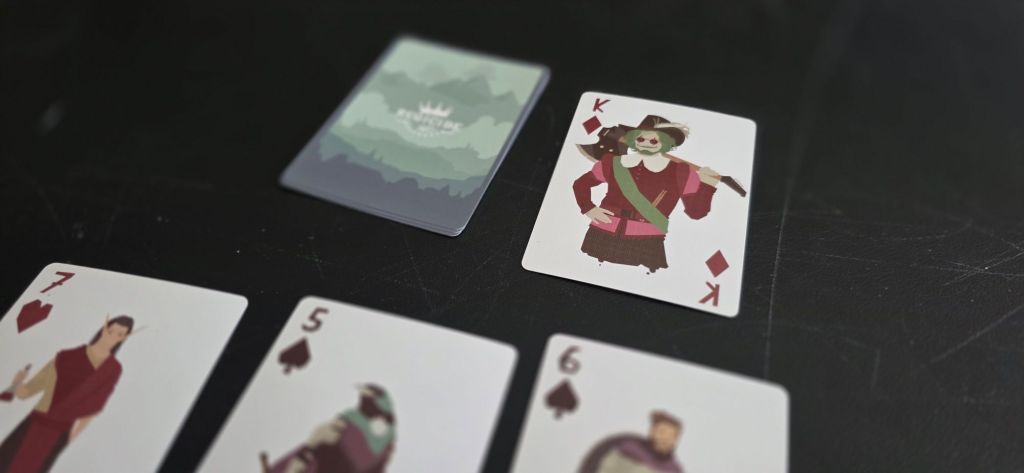
This is the game to be blamed by the craze. It all started with Regicide. This is basically a boss battler where you are fighting the face cards using the other cards as attack. Each suit has a special power that will hit harder, defend damage, cycle your discard or draw more cards. However, each boss shuts down its own suit, so managing your resources is how you win. Or so I’ve been told, winning is not something I do a lot in this game.

Regicide has it all. It’s clever, intense and super fun. It doesn’t feel like a normal “poker deck solitaire” in the slightest, it feels like a fantasy game. The only factor that brings it down on this list is because it’s brutal.

4 – Leafbearer

By Gregg Jewell

Healing and Feeding, on card at a time

This is actually a third step design. Gregg Jewell took another classic game, Mancala, and created Awaken the Ancients. Then, took that game and transformed into a poker deck game, and that is Leafbearer.

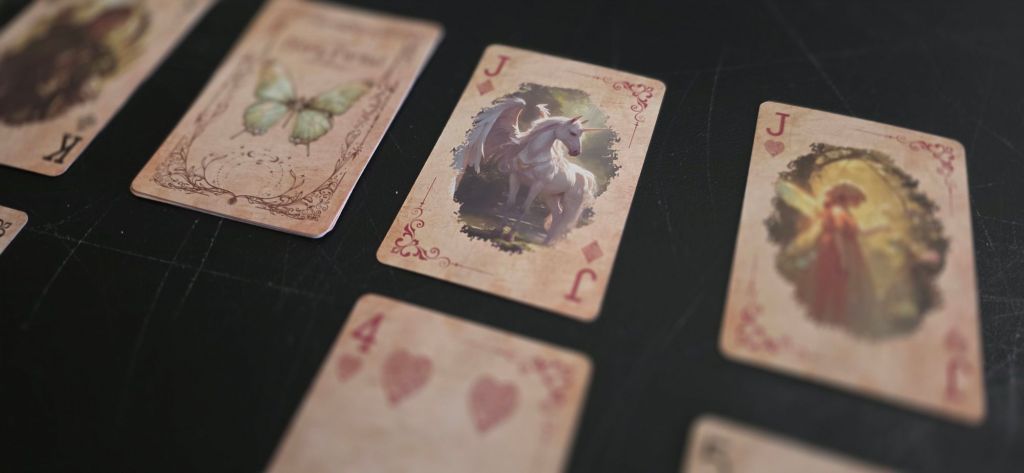
Each turn, like Mancala, you take all cards under one of the face cards and distribute them one at a time to the following spots. Your goal is to match the value to the face card above (11 for Jacks, 12 for Queens and 13 for Kings) with at least one matching suit. However, as soon as that happens, the card on that spot starts eating cards of the same suit played there. The goal is to heal all 8 faces, and try to have the least amount of cards eaten.

I think Mancala is a super underrated game, and this is just taking its spirit and elevating it to the max. It’s not hard to win, but quite a challenge to maximize your points, specially with the expansion.

3 – Alpine Solitaire

By Austin Palmer

Even on card form I can’t reach the top

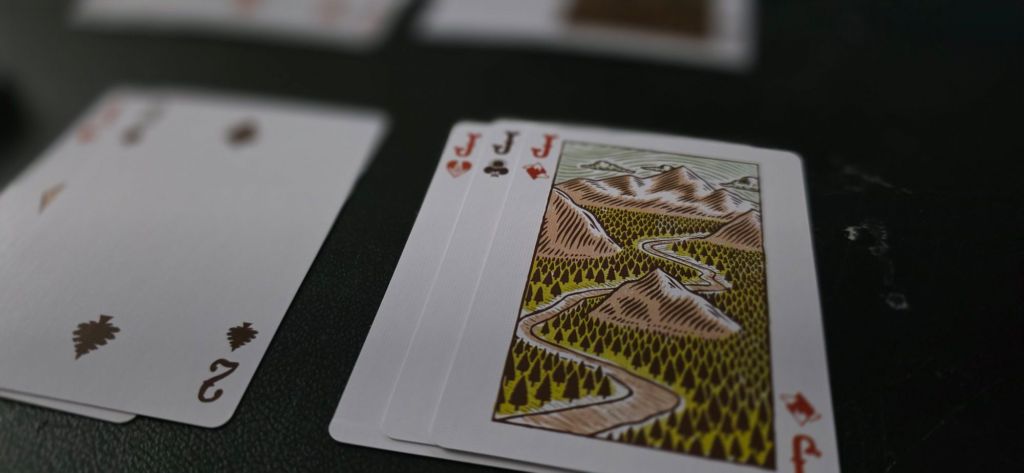
For a poker deck solitaire, this game is so incredibly thematic. Every turn you have to play a sequence of cards, either ascending, same value or descending. However, each grouping of cards must be more valuable than the last, either by quantity of cards or type. If you empty your hand, you create a milestone. Create three milestones, also in ascending order, and you win. Otherwise, you draw cards depending on the suit of the last played one.

This is such a complete and well rounded game. Every aspect of gameplay feels interesting and puzzling, with so much consideration and planning needed to win. It will melt your brain and make you keep coming back to try again.

2 – The Emissary

By Wil Su

Let’s parlay

This game is a paradox. I think it might be the best design on this list in a strict sense. It’s also one that I almost never play. Like ever. Let me explain.

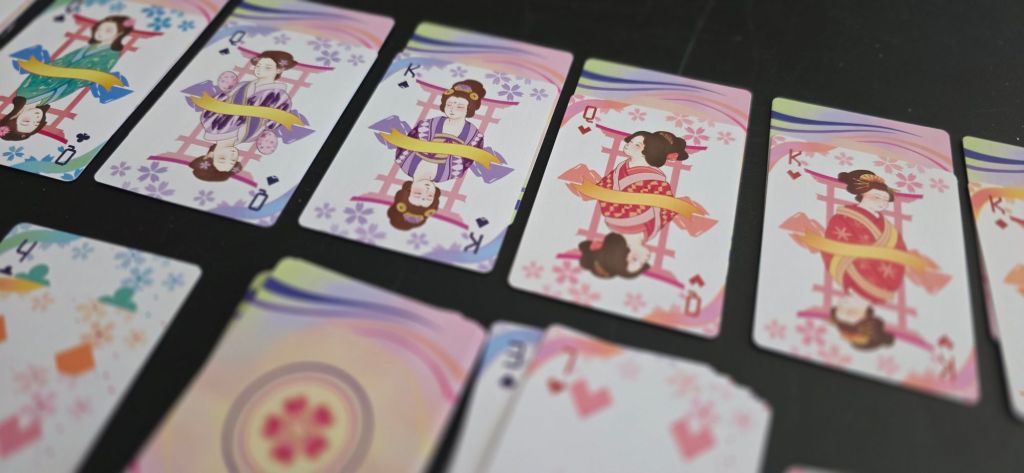
The Emissary is a solo trick tacking game, which is already quite unique, but it does so in a brilliant way. Every turn you go to one of the face cards, and your mission is to win tricks exactly equal to their position in line. This means that while their play is random, just a top deck, you have a huge burden of analyzing suits and probabilities, and which tricks to win or lose. It’s a fantastically rich design where there is so much to consider every single card.

Why do I never play it? Well, For Northwood exists. Wil Su got pretty much everything here, and just added some variety with your helper cards.

When I look at The Emissary, it feels like a game refined. There is very little extra or missing. I mean, it will cause you AP and fry your neurons, but the reward is just as intense.

1 – River Rats

By Mathijs Jansen and Robin Stokkel

P-p-p-poker rats, p-p-poker rats!

The elevator pitch is enough. Co-op poker with special powers. If you’re not interested, you can stop right here.

In River Rats, you’re facing said rats, AKA the Kings. They have a hand of 5 face up and 2 face down cards. You (and your friends, if unlike me you have them) play cards to a common hand to try to beat them. Worst hand gets a debit, 5 debits and done. For the players, game over. For the rat, well, then comes the second one. Beat the second rat and it’s player victory.

And while that enough sounds cool, every suit of the rats adds in a new challenge. More cards, more debt or messing with your plays. Meanwhile, each suit of the cards you play also have a power, including manipulating deck, cards played or your card market. Even improved by the Ace that represents you.

To put it simply, River Rats is just a lot of fun. It takes something as familiar as poker and turns into this very interesting and intricate experience without ever losing its heart. But one thing River Rats has better than any game on this list is balance. I feel the challenge is just at a perfect point of challenging but doable.

Top 5

Top 5: In-Hand Games

Ever since I discovered these, I’ve been in love with games that you can play on the go, completely (or almost) without any surface at all. So, if any of you want to jump into this crazy and highly creative world, here are my favorites.

But before, a few caveats regarding this list:

1 – I’m only considering games that are made to be played in hand. There are some amazing games that have in-hand game variants, but I’m not considering those.

2 – No works in progress games. There are some absolutely amazing games in BGG design competitions, but I’m only considering those that have an official page.

3 – To add variety, only one game per designer or publisher. If not, this list would be pretty lopsided.

Without further ado, here we go!

5 – Palm Island

Just missing the Heart of Palms

By Jon Mietling / Portal Dragon Games

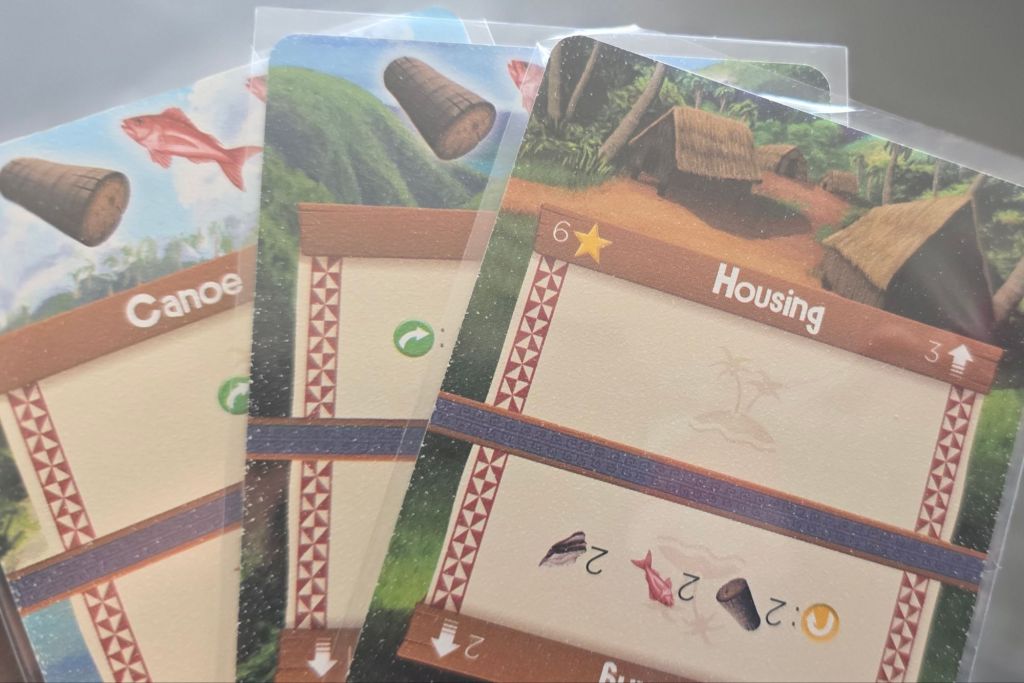
My first forage into this world, and still holds up incredibly well. On Palm Island, you have 8 runs through your deck to get resources and use those resources to upgrade cards for points or to produce even more resources.

Chowing between this and its sibling, Palm Laboratory was tough. I love that Palm Lab has different scenarios and clear win/lose conditions, but the unlock card system in Palm Island was just enough to take the cake.

This is a compact, highly thinky euro experience where you need to have long term planing and create an efficient machine, all in a quick play time that never fails to feel challenging and satisfactory.

4 – Handy Brawl

Hand to Hand Combat

By Igor Zuber / Self Published

If any game symbolizes “having and idea and running with it” is this one. The basis is that you get 5 hero cards, 4 enemy cards, shuffle them and have a fight. Every turn you activate the top card. You make your choices, the enemy just activates the first thing that will actually do something. First to reduce the other side to all damaged cards wins.

If you get the first pair, Warrior and Ogre, it’s already a highly fun and tense back and forward. But Zuber created so many characters on both sides that expand and innovate, all based on this simple system. Honestly, the only two things that hold this game back is the lack of art and a need for a bit clearer symbology.

Handy Brawl is not just a game, it’s a whole system with so many possibilities and variety. Every combination so far feels well thought, exciting and unique. Get in some art and we have a bona fide classic in our hands.

3 – Loot the Loop

Smile! You lose!

By Wil Su / Self Published

If you want to start in this universe, start here. No investment needed, as Loot the Loop is simply played with a regular 52 card deck (and a joker).

The idea is simple, if the top 2 cards are face down, turn them face up, then chowing one number value of the two you move that many cards down, the famous travel mechanism, and then check. Find aces or numbers, you collect them, find the joker and you may exit, find any face card and you lose. Can’t travel? Lose as well. But if the top card is a number, you can save it for later and that one mechanism adds so much strategy and forward thinking.

Loot the Loop is simply addictive. It’s lightning fast, a bit random yes, but the flow is so fun that you just want to play again. Such an elegant and well thought out design, so much that inspired many other games in the genre.

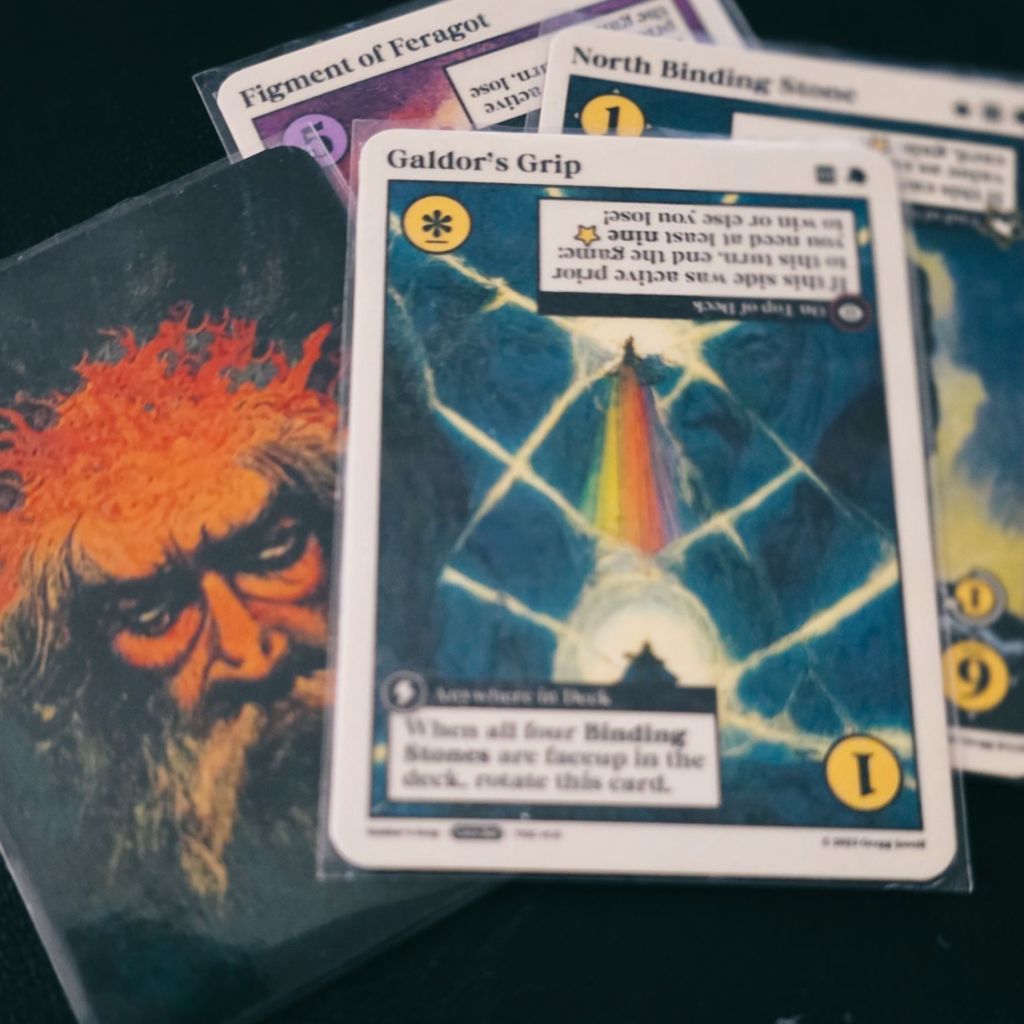
2 – Galdor’s Grip

Get a Grip! Can be anyone’s…

By Gregg Jewell / Self Published

Galdor’s Grip takes the travel mechanism described above and elevates it to its max. On Galdor’s Grip, instead of collecting cards you need to find four binding stones and then the game’s namesake Galdor’s Grip while also manipulating other cards to reach 9 points. But some cards that give you points can also cause you to lose.

In its base, its an insanely addictive game that rewards repeated plays and knowing the deck. But there are 3 expansions so far. You take 12 base cards that always need to be there and ANY combination of 6 cards, and you have now an unique scenario where it’s up you to figure out how to manipulate them for a win. That is so much variety and replay value.

Galdor’s Grip is brilliant. It has everything you want an in-hand game. It’s lightning fast, portable and super easy to pick up or put away. But, allied with that, it’s a thinky puzzle where every game plays uniquely and require its own solution.

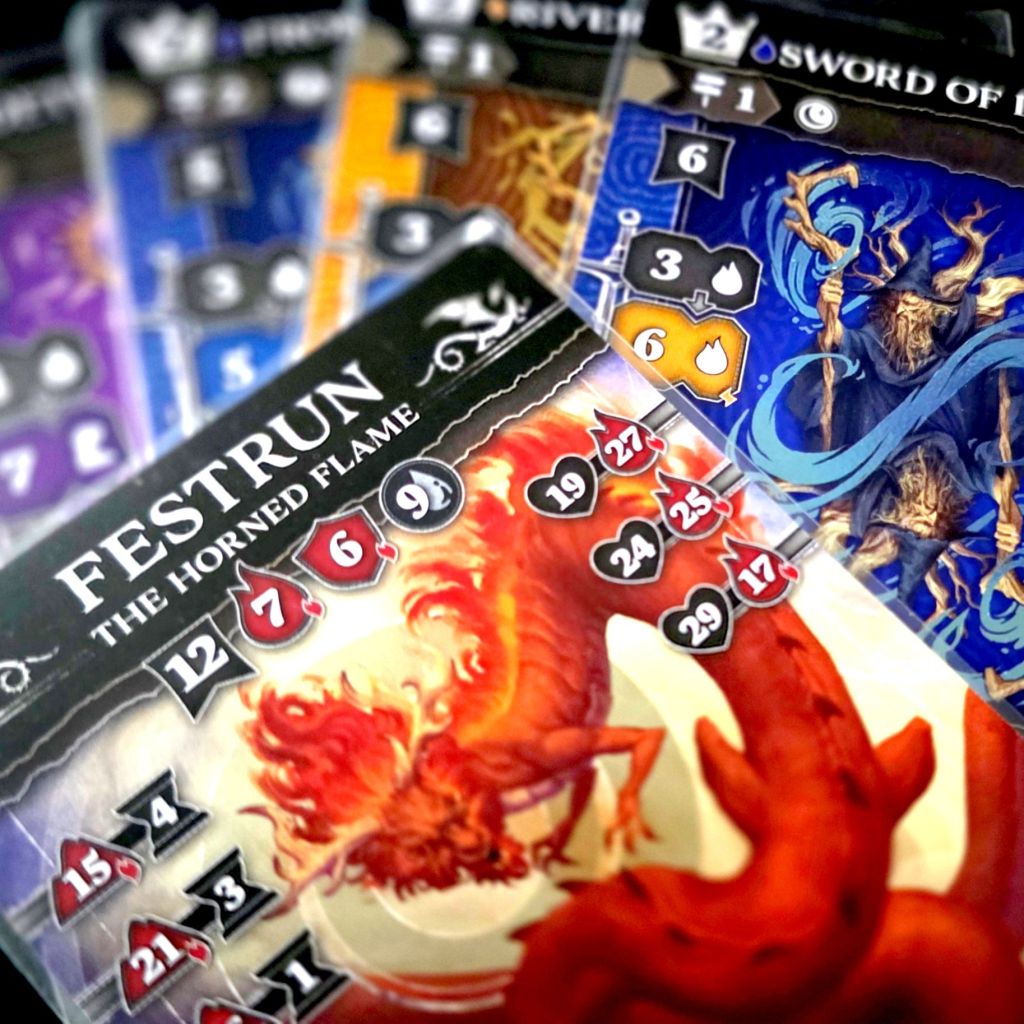
1 – Dragons of Etchinstone

Run, Fest, Run!

By Joe Klipfel / Chip Theory Games

Coming from the master of compact and in-hand games Joe Klipfel, comes a game that combines all characteristics of the other games in this list. It’s thinky, compact, quick, easy to put away and pick back up and has great replay value.

The most interesting though, is that lots of in-hand games either use the travel mechanism or the store resources sideways one. Dragons goes a different route. Each the, you draw a hand of four, and try to overcome your challenge by having the right combination of element, spell and bonus, with one card being kept. It’s a simple system to understand, but there are so many variations and special abilities that makes this deep.

Dragons of Etchinstone is almost impossible put down. The design is inspiringly refined and offers so many great decisions and moments, while being perfectly portable and comfortable. And the base alone would be enough for the top spot, add in the unique characters and you have a classic for ages.

Review

Let’s Review More: Mech Bunny

1 Player

Designer: Gabe Barrett

Artist: Jake Lawrence

Publisher: Best With One Games

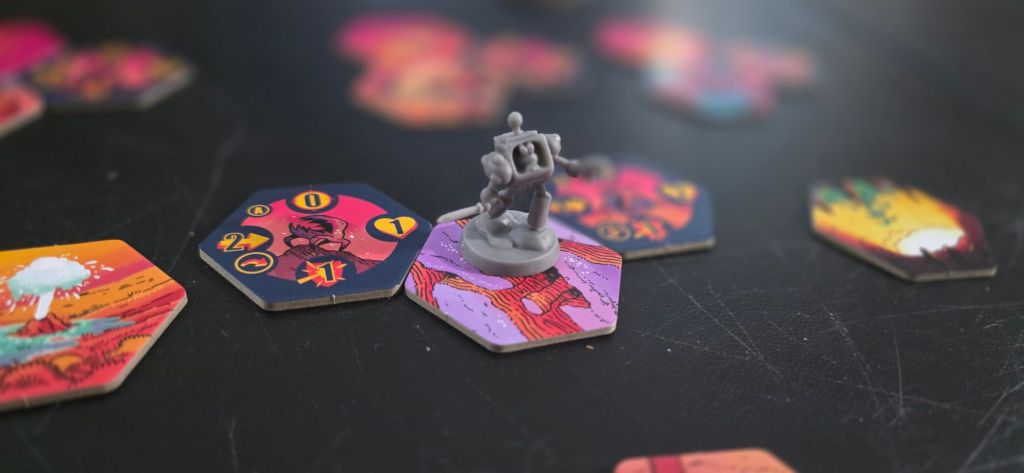
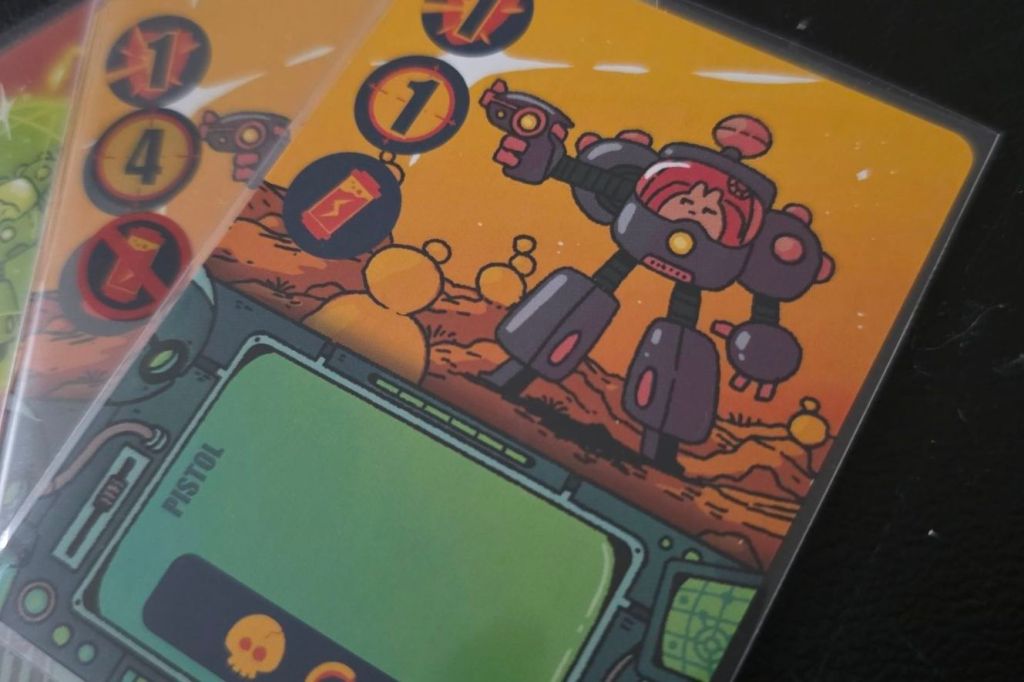
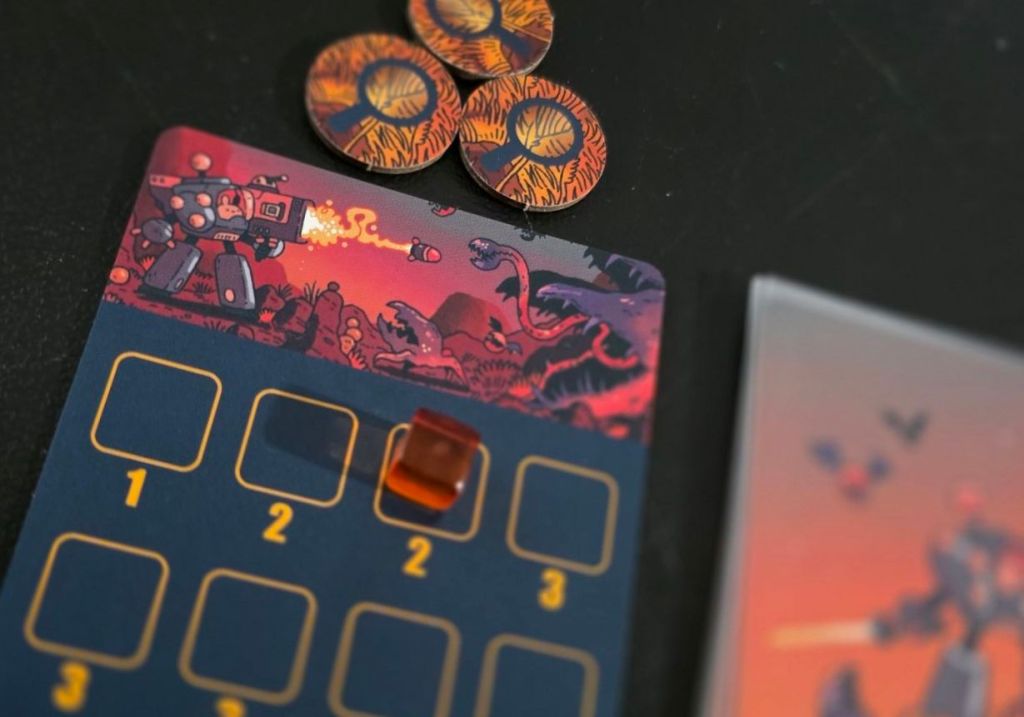
A desolate planet, unknown, with dangers lurking in every corner. Who better for that role than a BUNNY IN A MECH SUIT! But is this game a hare find or is just a hop away from dust bunnies?

How to Play

Danger? I don’t carrot at all!

Mech Bunny takes place over sequential scenarios on a campaign, where you unlock new weapons and bigger challenges.

Each game have specific missions and setup, but the basic structure is the same. On your turn you have four cards, and you can use energy to play these cards for their effects, usually attacking in some capacity. The first 3 of energy are free, the rest gives you heat, which just clogs your deck.

After your turn, enemies on your location or your spaceship attack. Attacks on you give you heat, on your ship causes it damage. Too much of either and its game (and run) over.

One of the main mechanisms is upgrading cards. Whenever you kill an enemy, you get XP. With enough XP, you get a transparent upgrade that permanently (well, for that run at least) improves your cards.

Rules and Components

Leeeroy Flufiiiiiins

The core of the game is fairly straight forward, and slowly introduces its more complicated aspects through the different scenarios. It’s a good ramp and it eases you in with complexity along with difficulty. However, the rules could be better written. Some definitions are too vague or ambiguous.

Components are interesting. Card and token quality is good, and tokens and locations don’t have any icons to make them flexible in the scenarios. The transparent cards are sturdy, but maybe too thick when you start piling the on the cards. Small issue, as you don’t usually put more than 2 or 3, but it gets noticeable.

Score: 7/10

Gameplay

Destruction never looked so adorable

I played this game a lot more than I usually do when I’m doing reviews so I could get a clear impression. This is because the first few games are fun, but they don’t really shine. But as the scenarios progress, you can really see rhe variety of concepts and ideas that never weight down on the complexity. The new mechanisms roll right in the gameplay, but they force you to look at the strategy in a different light.

I don’t feel Mech Bunny implements any of its mechanisms in an unique way, but they are more then the sum of their parts. It both makes you feel indestructible with the firepower you accumulate, but also overwhelmed by all the enemies and tasks to win.

Score: 8/10

Theme and Art

Mission: Red Planet

The theme is minimalistic. It’s a bunny in a mech suit exploring a new planet. No info on the planet or the mech or the bunny. And that feels on purpose, it’s supposed to be whimsical and, in a sense, almost fairy tale like.

That allows the story to be told through the mechanisms. The way your cards work, the enemy abilities, the new challenges you face, all tell what needs to be told, which I appreciate.

Score: 8 / 10

Conclusion

This bunny is on fireeee!

Mech Bunny strikes a great balance of being a campaign game that is both easy to get into and also offers enough to keep you entertained through each run. It’s also a great show of flexibility, since after going through the campaigns you can actually mix and match challenges to create your own.

Score: 7.6/10

Top 5

Top 5: Ancient Anthology

Garphil’s Ancient Anthology is a very interesting group of games. They started as individual outings apart from their other sagas, but because they shared an overall theme and starting to get numerous, they became their own thing.

With two more coming soon and many more I hope in the future, here is my top 5 games in the line. And, just to be clear, there 7 games and all 7 are really good. These are the ones I play the most.

5 – Assyria

Why so Assyrious?

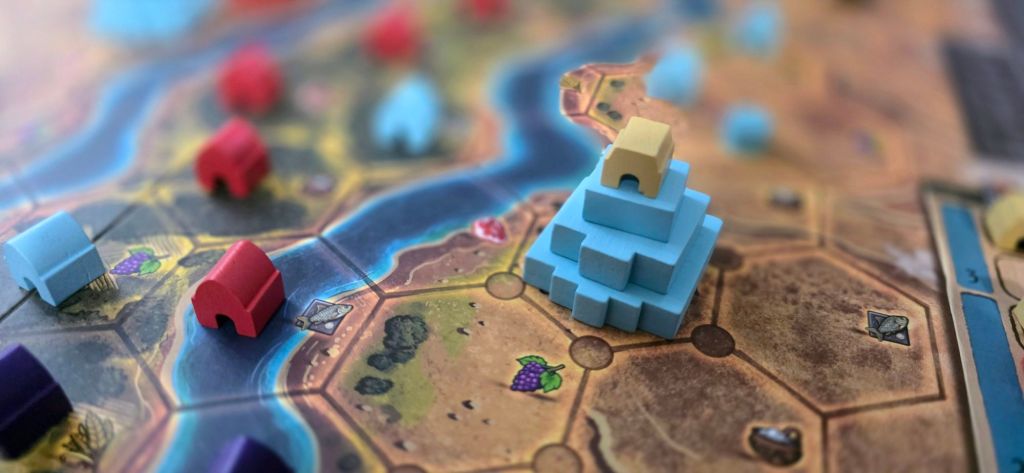
Though not originally from the series, or even from Garphil, Assyria found a new home and it fits perfectly.

It’s a game with a lot of elements: action points, auction, resource management and even light engine building. But it all comes together in a very fluid and intuitive flow.

Assyria feels like a gateway to heavier euros, where it presents you with a ton of interesting choices, but never weighs you down with rules overload.

4 – Raiders of Scythia

And after that, Raiders of Oakland?

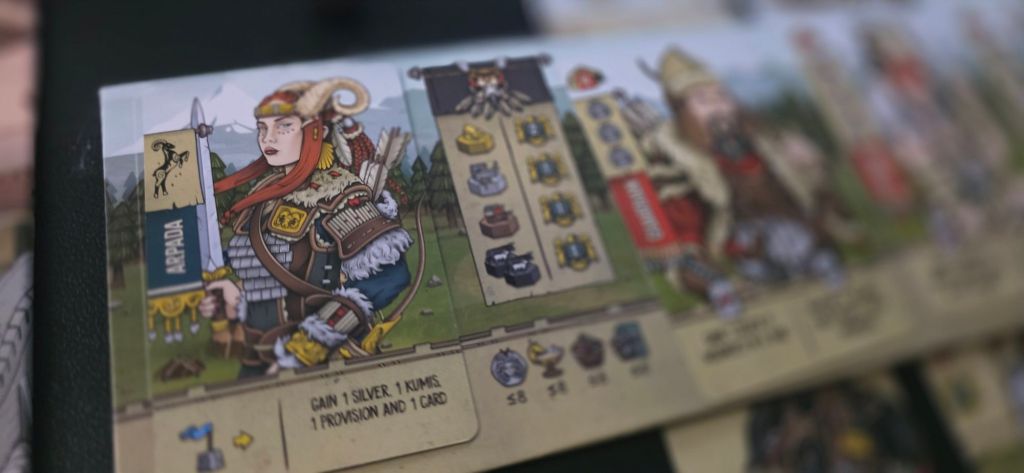
The main reason this game is only on fourth is that its older sibling exists to share the space. The core elements that made Raiders of the North Sea amazing are kept here, but lots of improvements and ideas inspired by the expansions make this just as impressive.

Raiders of Scythia shows that the core mechanisms in North Sea are as good as ever, but it has enough identity to shine on its own feet.

3 – Skara Brae

Drafting, old school!

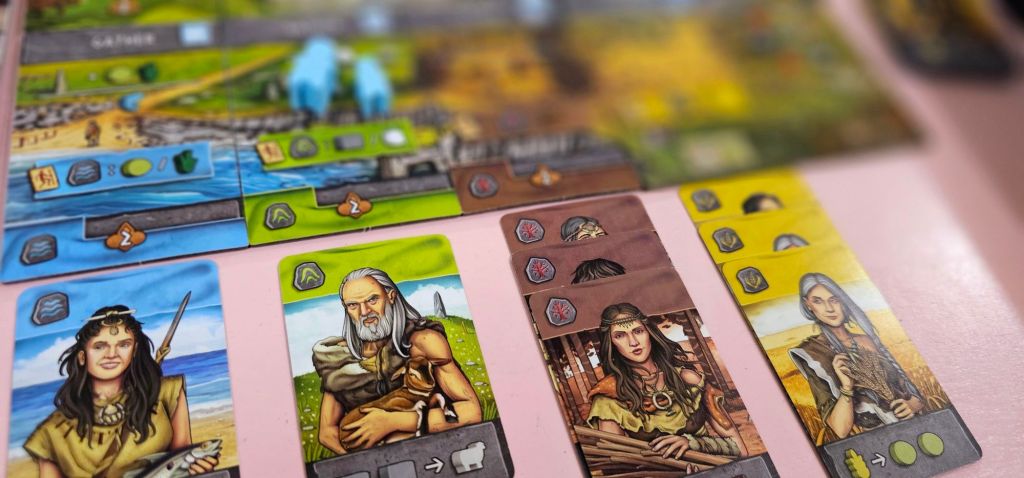
Do you like resource management? Well, there are few games as resource-y and management-y than Skara Brae. Aided by drafting and worker placement, but the heart is managing how you earn, spend, trade and store the whopping 16 types of resources. But, even though it’s a huge number, it never feels excessive.

In its surface, Skara Brae is a simple game in terms of rules. But beneath there is a tense and rich game of resources where efficiency, planing and perfect timing are crucial for winning.

2 – The Anarchy

Why do we build the wall, my children, my children?

A game that was up until very recently one of my favorite verb and writes, Hadrian’s Wall, is not even on this list. Why? Well, The Anarchy exists.

If you like both verb and writes and amazingly complex systems, both games are mandatory for your collection. The essence is receive workers, than spend them to advance different tracks, earn more works, rinse and repeat. All in hopes to raise defenses and prepare for attacks.

The Anarchy is everything that made Hadrian’s Wall amazing, but it streamlines what was excessive and expands on its more intesting parts. It’s equal parts intense and rewarding.

1 – Ezra and Nehemiah

Where do we even begin?

This is one of the heaviest games Garphil ever put out, and at first it does look daunting and intimidating. But once you start playing it’s surprisingly intuitive. The heart of the game is playing cards and adding banners, which will allow you to do certain actions better. But the one card you play have so many raficiations and possibilities that can make your head spin.

Ezra and Nehemiah feels like an amalgam of the best systems Garphil put out, but combined in a manner that feels unique. It’s a hard game to master, but one that offers something new each play.

Top 5

Top 5: Simply Solo

For me, the match of Scott Almes, a designer I’ve always enjoyed, and Button Shy, one of my favorite publishers, was a match for the ages. Well, this line did not disappoint one bit.

Even at its worst, the games are highly enjoyable and, as promised in the tag, strike a great balance of easy to get into and lots of replay value. We’re currently at number 10, but as of February of 2026, here are my top 5 favorites.

Note: A Dragon’s Gift is not included as I am yet to receive it.

5 – Lands of Amazement

Fun! With Shapes!

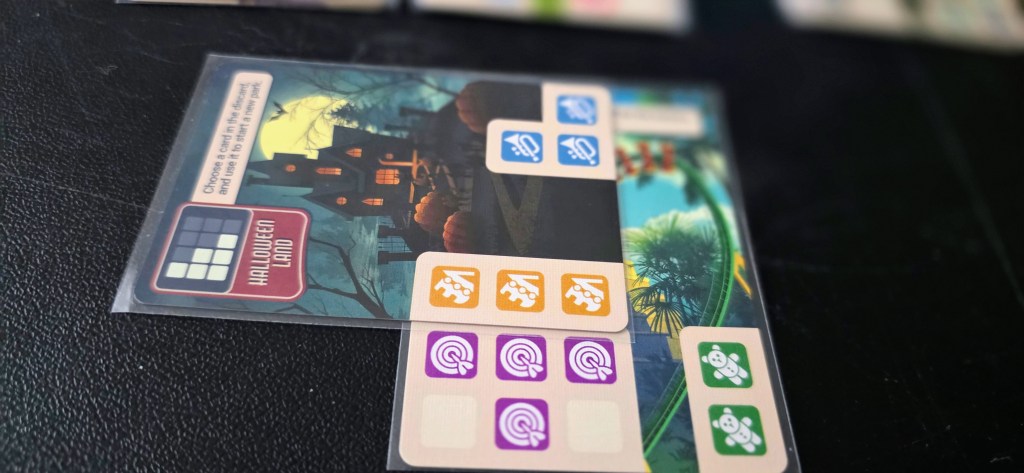
The latest of the line I actually have, this is truly an odd one. There are two phases on this game. On the first you have 4 turns where you’re trying to match the goal shape in the cards in the display with the cards in your deck. Then, after each turn, you can add to the reserve some cards as long as they match a symbol with the current round’s symbols. Finally, you take all the cards you reserved and try to assemble this big park, and you do have to use ALL of the cards.

The shape matching is quite funky as each card has two sets of shapes, and very often the cards themselves get in the way, and that is the whole challenge. It takes a very used mechanism and implements in a super fun and unique way, and that part of the game is absolutely a blast.

The final part is… well… intense. There is a lot to consider, and instead of assembling with two or three cards, you often have at least six, but often more. On one hand, it is a great culmination of the work you’ve been doing the whole game. However, I will be honest, I don’t find it always fun. Interesting? Yes. Thematic? Absolutely. But not necessarily fun.

Still, this is Almes going on a different direction and showing how that can be done without additional rules overhead, just a different structure, but it makes this game memorable and forces you to think outside the box

4 – The Royal Limited

Choo to the Fancy Choo

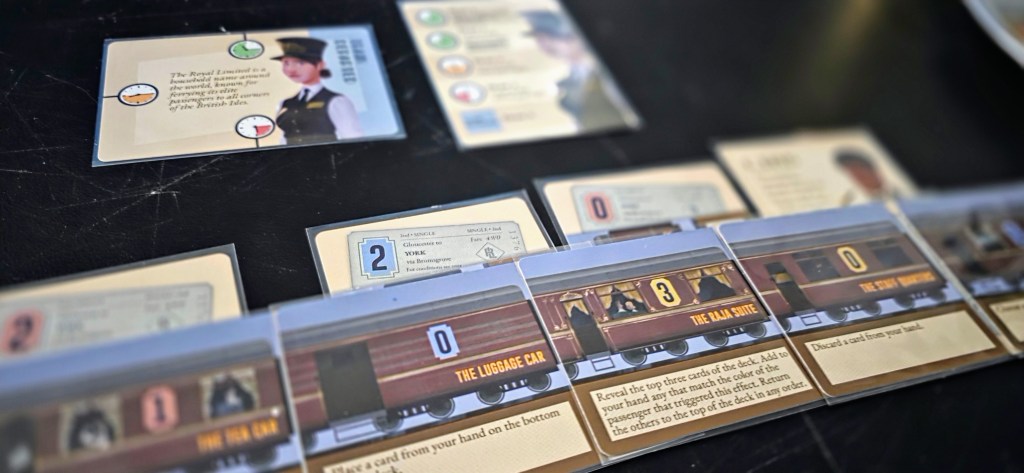
On The Royal Limited, you have 4 turns to play trains and passengers to your line. Trains cost cards in hand to play, the lowest valued ones have negative effects while the highest valued have beneficial ones. Train cars need to be played not adjacent to the same number or color. Passengers must be played in the correct colors and, in case of VIPs, also taking in consideration their specific requirements. As soon as you assign a passenger to a car, you activate their effect.

The goal of the game is to use as much of your resources as possible, including the cars, passengers and VIPs. Smaller scores are best, and 0 would be a perfect game. The Royal Limited is the definition of a tight game. The time is short, the actions are limited and you have to balance the usage and make sure you’re using everything to its most effectiveness. It’s one of the quickest in the line, but it is a dense experience full of great moments of interesting decision space.

3 – Food Chain Island

So! Many! Noms!

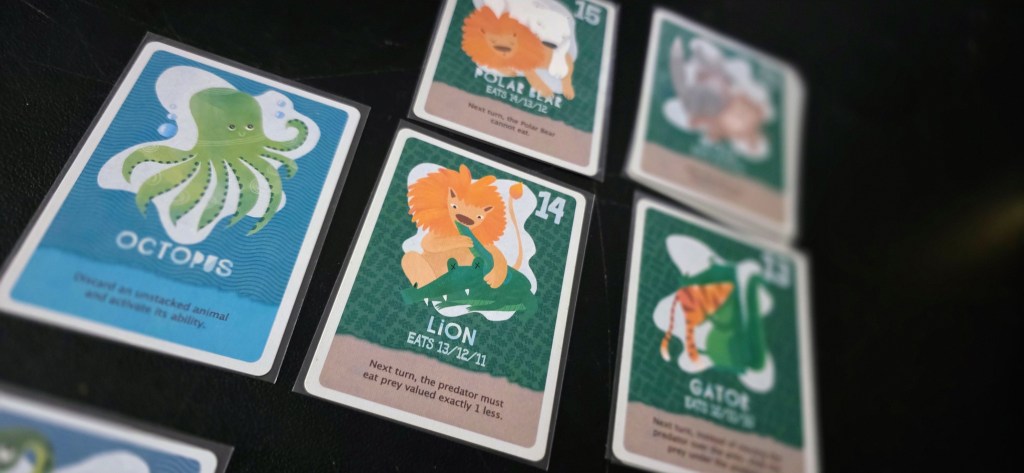
For reasons I will discuss later, this is not my favorite of the line, though it’s obviously one I love. But, if I’m being honest, this is the best most elegant design not only on Simply Solo, but possibly of everything Scott Almes put out. Food Chain Island has basically one event of randomization, which is the initial setup of the animal grid. After that, the player takes turns eating animals that are adjacent and have values up to 3 lower, and activate their powers. Some good, some bad. And your goal is to have 3 or fewer stacks of animals left. That’s pretty much it.

What a mind blowing design this is. Front the first instant, you have so many decisions and planning to do. The decision space is humongous, and it requires permutations of decisions that will make your brain hurt, in the best way possible. If you are AP prone, you can sit for a decade without moving a single card. But, once you see the pieces falling into place and your plan coming to fruition, wow, what a feeling.

Why is this number 3 though? Well, it’s not always exactly fun per se. The weight of all the decisions and combinations falls heavy on your shoulders. It’s a fantastically rewarding experience, but one that is part amusing and part vexing.

2 – Unsurmountable

The Cold Never Bothered Me Anyway

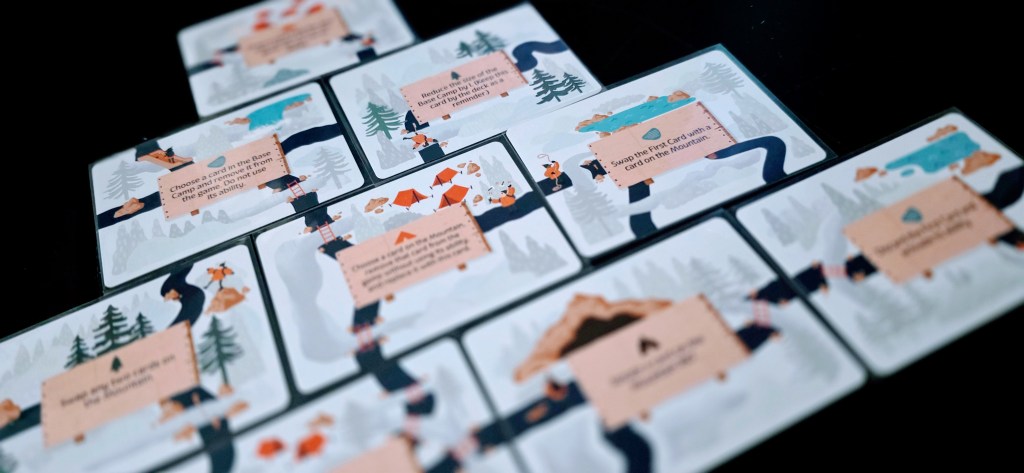
This, in some ways, is the opposite of Food Chain Island. While that was heavy and vexing, there are few games are chill (yes, pun intended, obviously) as Unsurmountable. You have a base of cards, and you can either play the first one in the mountain or discard the others for their effects. The goal is to create a pyramid of cards with a continuous path from under the mountain to the very top. It’s quite simple, and in its original form even a bit easy.

The brilliance of Unsurmountable is how it handles difficulty adjustments. At higher difficulties, not only you have to create the path, but also not repeat the same symbol on each level and on the slopes. Each increment in the difficulty is natural, challenging, and forces you to re-think your game plan. No other game has such a smooth and exciting slope (there I go again) of challenge that barely add any complications in terms of rules.

1 – A Nice Cuppa

If I take my coffee black, is the game easier?

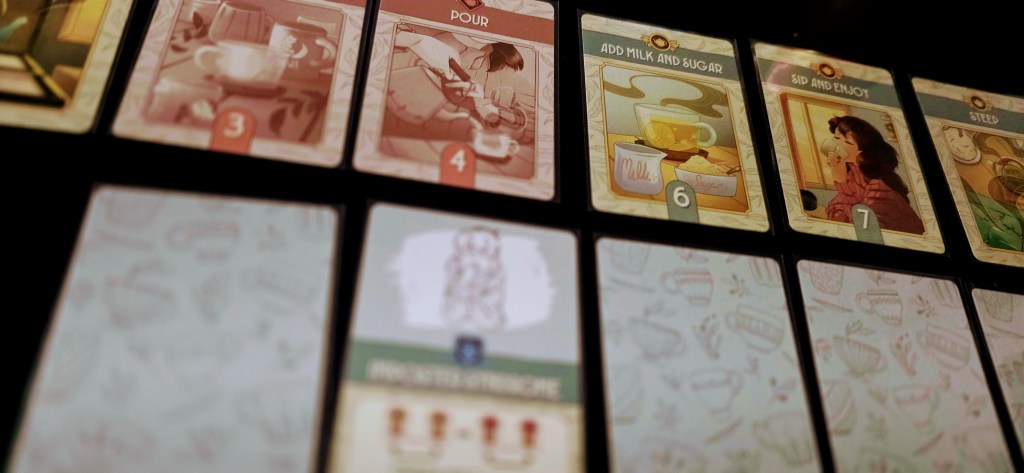
No other game embodies what Simply Solo line as perfectly as A Nice Cuppa. It’s a warm, cozy and fairly simple game where you’re trying to organize your line of cards (the steps to the perfect cuppa), by revealing and executing the worry cards underneath them. It’s sort of an action programing game, and quite an easy one to grasp and start playing.

But, what makes this special is that you never have a decision space too small that is obvious or too big that is harrowing. It’s always this perfect mix of challenge and accomplishment, a slow but steady experience that will blow you away, but slowly. Like sips in your favorite cup of hot and tasty beverage in a chilly winter’s morning.

Review

Let’s Review More: Dragons of Etchinstone

1 Player

Designer: Joe Klipfel

Artist: Frederico Pompili

Publisher: Chip Theory Games

Bring sorcery and Dragons into your hand in this battle of wits of your magic against ancient wyrms, all without ever needing a table to help. But will you tame the dragons or will you just drop all the cards like a clumsy buffoon?

How to Play

FROM A LACERATED SKY 🤘

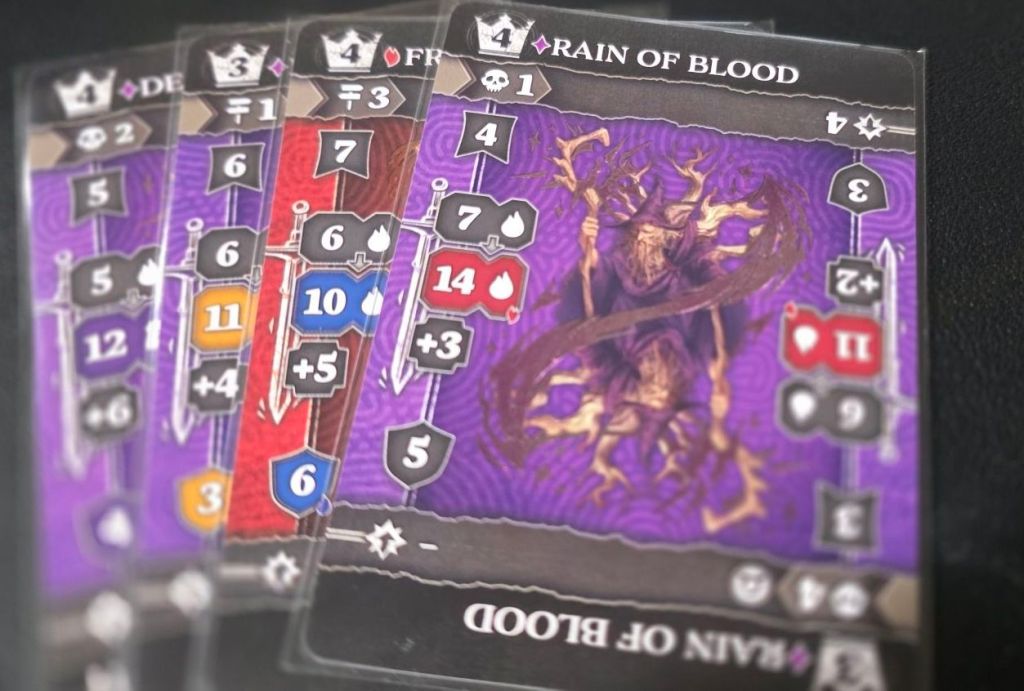
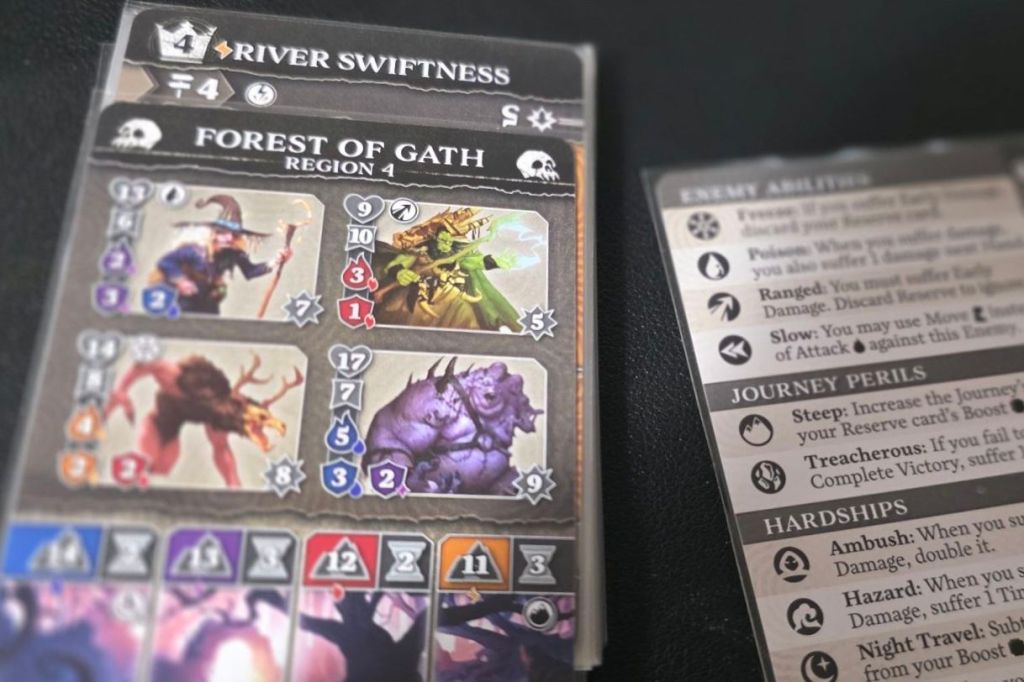
You will run 4 times into different regions to prepare to face your chosen dragon in the end. During each region turn, you will draw a hand of four cards, and reveal the top of a fifth one that will determine the challenge you will face. You can face any of the 4 enemies or 4 Journeys.

From your 4 cards, you will use 3. One for the element and initiative (only relevant for enemies), one to get either attack or movement, and the last one to add as a bonus  to any of the values generated. If you generate less than half of the target value, you take only penalties. If you have more than half but not the total, you get both penalties and bonuses, and if you get the whole value you just get the bonuses.

Penalties for Journeys make you discard cards from your deck, which makes you have less turns. For enemies, it’s damage that forces you to downgrade your cards. Both types of encounters give you experience, that you can use to upgrade your cards.

When you get to the dragon, you face two phases, each with double hands that are combined. First you draw 7 cards and make two distinct journey hands, combining their total amount. You have three tiers of result, each with a resulting discard penalty. Next you draw the remaining cards and make two attacks, combining both the attack values and initiative. This will tell you how much damage the Dragon sends your way. If you’re able to soak up all the damage, you have won.

Rules and Components

So much info!

This is a fairly complicated game, doing a lot with not too many components. Thus, the rules have to cover a lot of details. Thankfully, they do it quite well. Plenty of examples and diagrams and reference tables to cover all cases. It takes a bit to fully understand everything, but once you play a game or two the flow becomes instinctive.

The cards are well illustrated with foil details and we’ll structured for gameplay, but they do feel a tad flimsy in the hands. The deck box it comes it holds everything, including expansions quite well. However, that is a preference of mine, not a lot of room for sleeves. Not a big deal, but I am a serial sleever, specially for a game with so much shuffling and handling.

Score: 9/10

Gameplay

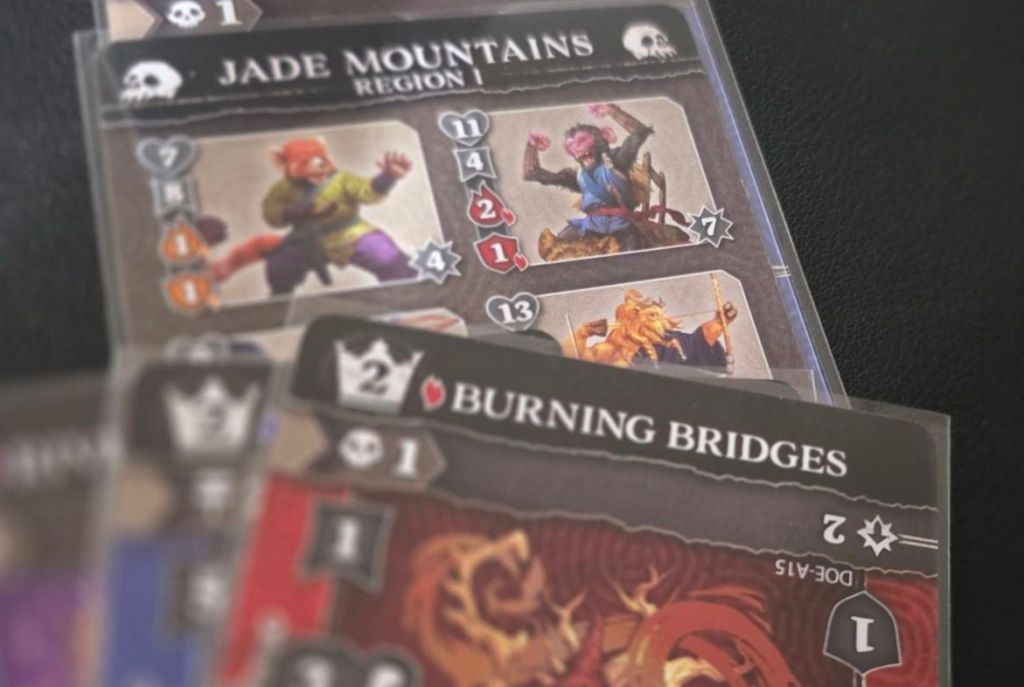
More like Burning Pandas, am I right? 😂

This is a sequence of non-trivial puzzles to solve each challenge where you’re trying to maximize the value of your cards by taking minimal damage, extending your plays and having just the right balance of upgrades to prepare for the big showdown. It’s a fast game, but it’s quite thinky and the decisions are not obvious. There are so many factors to consider and how to have the best turn each time. For such a compact game, it’s dense in terms of gameplay.

And this is a so called in-hand game. What about that aspect? Well, it’s easy to handle, comfortable and doesn’t get in the way of the gameplay at any point. Perhaps the final hands where you are creating two sets can be a bit fiddly, but totally manageable.

Score: 9.5/10

Theme and Art

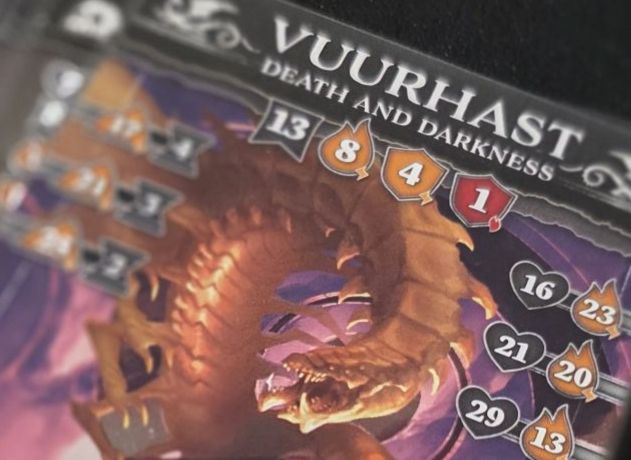
Vuur! Vuur Hast! Vuurhast Mich!

I would love to see each spell having its own unique art and flavour, but from a functionality perspective, I absolutely understand why they chose. Still, the illustrations are high quality and each element has its own flair. The dragons art awesome, very unique and quite menacing. The foil details help the images pop, but are not too forward to help with the readability of the cards.

The rulebook does give some brief details about the world and what you’re doing, but still the dragons have no more and your enemies don’t even have names. Again, very understandable for its compact size, but still a bummer.

Score: 8.5/10

Conclusion

PHENOMENAL POWERS, itty bitty storage space

I’m a big fan of Klipfel and it’s compact designs, but of his in-hand games this is by far the best. It’s tense, crunchy, brain exercise, but fluid, intuitive and comfortable. There is a lot to like, and this Chip Theory version brings in top notch components and extra content.

If you want a portable game that still delivers every time, look no further. I feel this is one that will live in my backpack and pockets for years now.

Score: 9/10

Review

Let’s Review More: Tokaido Duo

1-2 Players

Designer: Antoine Bauza

Artist: Xavier Gueniffey Durin

Publisher: Stonemaier Games

Disclaimer: This copy of the game was very generously provided by Stonemaier Games for review purposes.

How to Play

Dicey Journeys Ahead

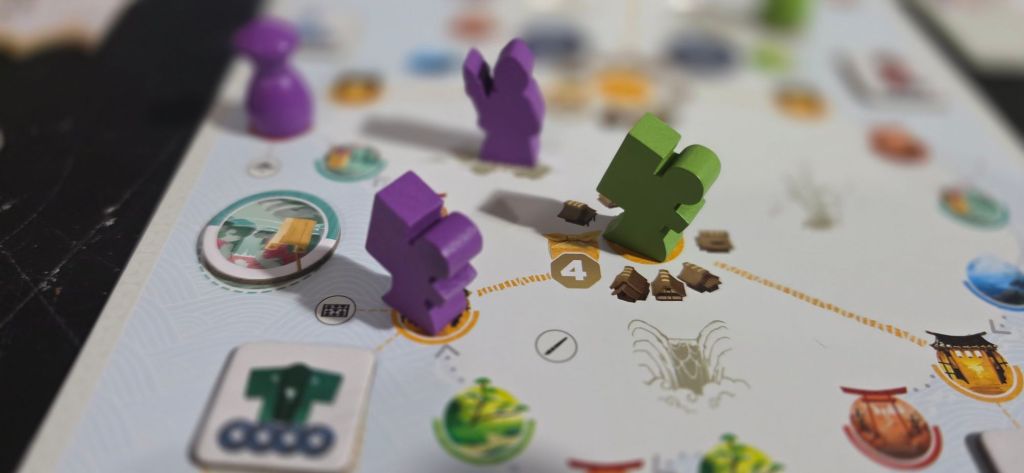
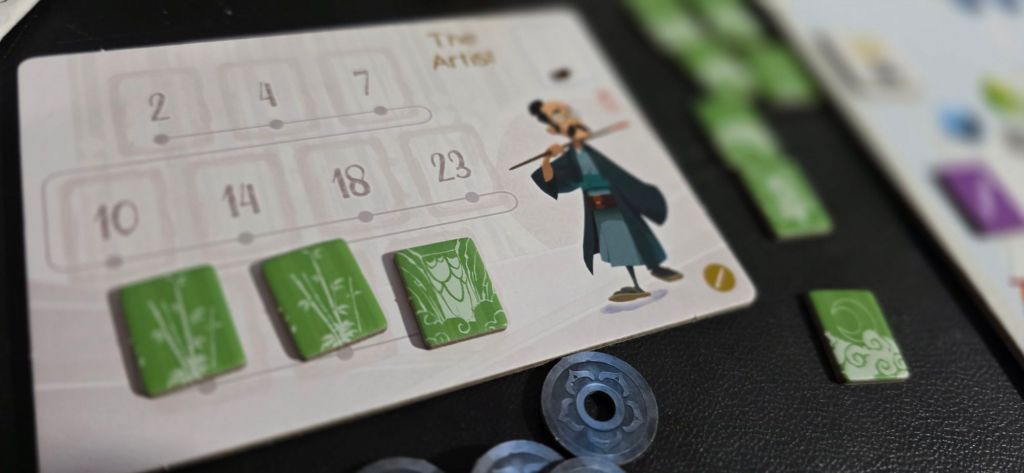
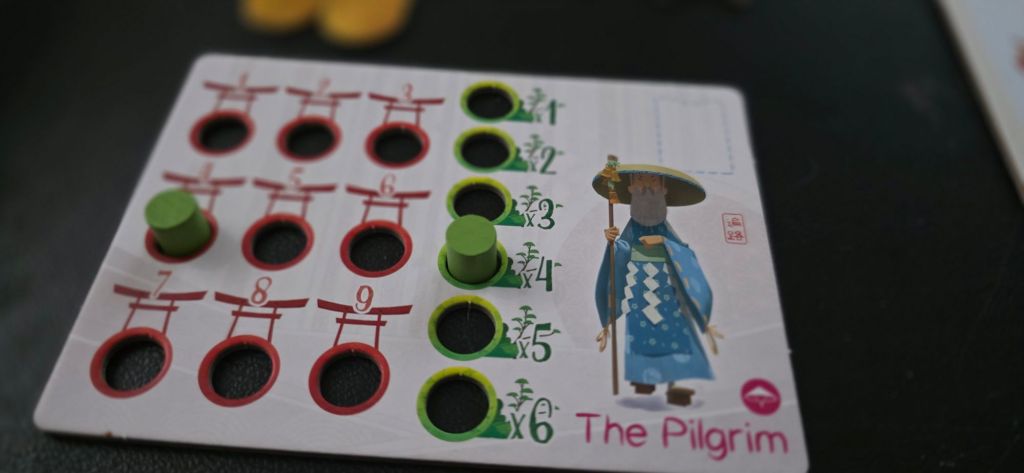
Each player controls 3 different characters. Pilgrims just wander improving two different stats, painters flip and deliver paintings around town, and the merchant acquires and then sell products to specific towns.

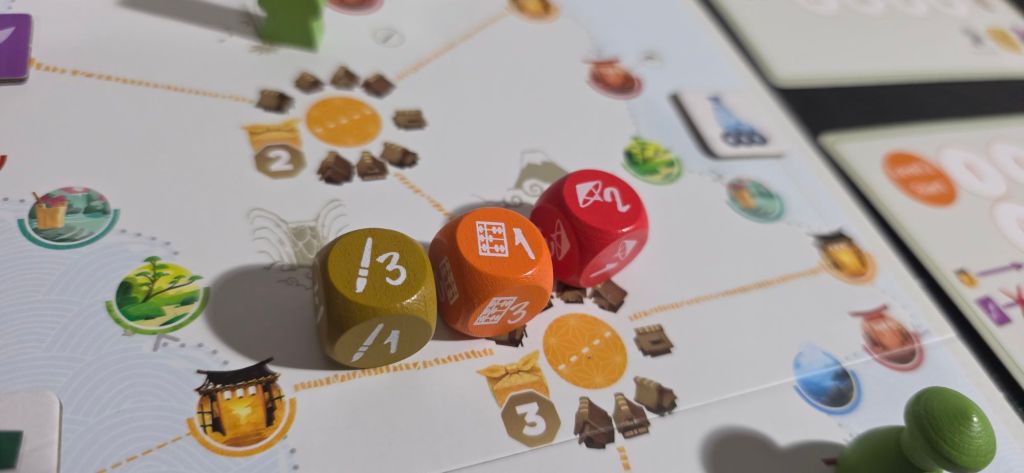
Every turn, the active player rolls the three dice, then drafts one moving the related character. Then the other player takes the second die and the active player takes the final one. Play continues until one of the characters reaches the end of their respective scoring track.

Rules and Components

A New Meaning for “Check in the Back”

I’m not sure how the components compare to the previous Funforge version, but it’s what I come to expect from Stonemaier. Characters are nice and distinct, board is solid, dice and quite nice, and the cardboard tokens are sturdy. Rules are printed in high quality paper, and there is one set for each character for each player for ease of consultation.

Rules, however, are a bit lacking, which is unusual. Overall flow and actions are there, but some minute details are left to be interpreted or are just very briefly mentioned.

Score: 7.5/10

Gameplay

Green Paint was on Sale

Let’s get it out of the way: this only barely feels like the original Tokaido. The journey characters, yes, but the flow is completely different. It’s not good or bad, it’s just what it is.

But, as its own game, it’s a very interesting dueling game. It’s not aggressive in terms of interaction, but rather being tactical in the movement and dice drafting to force your opponent to be suboptimal. You’re always progressing for the most part, but in this quick game being slightly better is usually enough to secure a victory.

There are three different characters, and they feel overall balanced, but not totally. Experts in the game can correct me, but I feel the painter is usually the easiest to handle, followed by the merchant. The pilgrim progresses slower, but has more utility to help the other characters.

Score: 8/10

Theme and Art

Gates and Gardens Guy

Naiade’s art is, as usual, amazing. It’s a very classic and distinctive look with lots of white contrasting with the heavy colors of the details. I love that even the same characters have very distinctive interpretations between the two players.

The theme also comes through well. In its simplicity, each character does feel like what they gameplay reflects. The Pilgrim is just passing by, admiring locations and having the longest journey. The Painter finds inspiration in peers, and gifts to those interested in their art. The merchant is just going around, getting wares and selling in the right cities.

Score:8/10

Conclusion

Duo, but Solo

I’m evaluating this game not as a version of Tokaido, but as its own thing. I feel like other than the art, the connection is just not there enough. So, just so everyone knows, your opinion about Tokaido has very little bearing on your enjoyment of Tokaido Duo.

But, as far as duel games go, this is a very solid one. While none of the individual systems are unique, their interaction and the whole package is very well done.

And, as usual for Automa Factory, the solo experience is stellar. Easy to understand, very little overhead, and great balance.

Tokaido Duo is a fast and compact game that packs a huge punch. It uses interaction in a very interesting way, allowing it to be competitive without being cut-throat.

Score: 7.8/10

Preview

Let’s Preview More: Fantasy Map Maker: Improved Edition

1-100 Players

Designer: Harry Metcalf

Artist: Harry Metcalf

Publisher: Doopy Games

Crowdfunding Link

This is an usual situation for my previews and I already talked about this game before. It was actually one of my favorite games of 2024. But now they’re coming up with a fancy and improved version, which is enough of an excuse to talk about this game again.

Cartographers, For Real Now

This is actually not that bad for me…

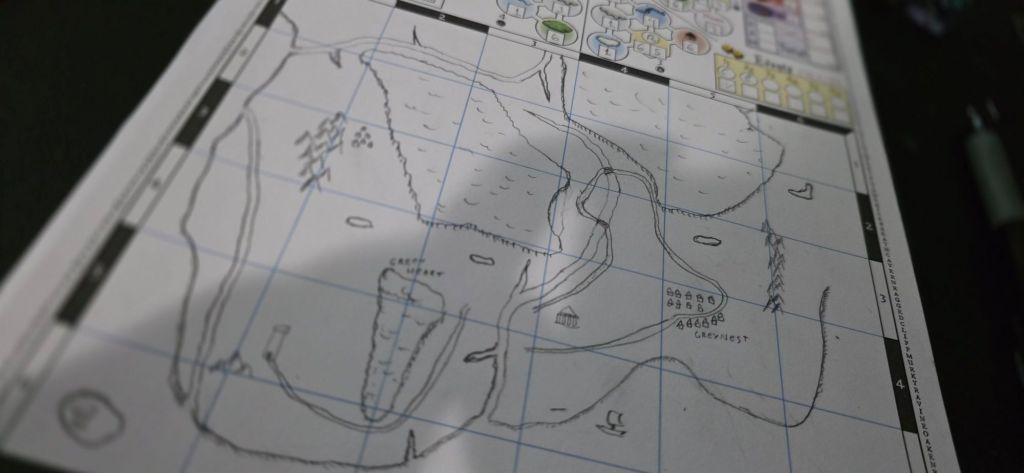
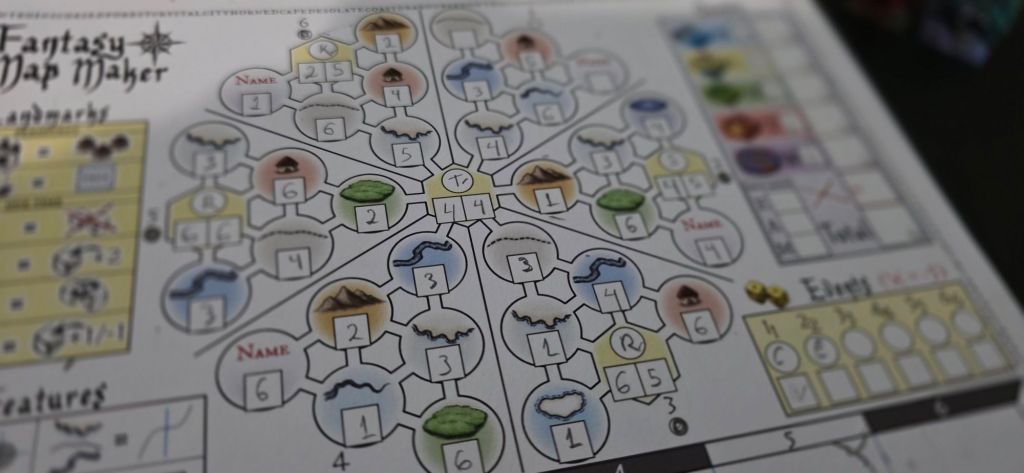
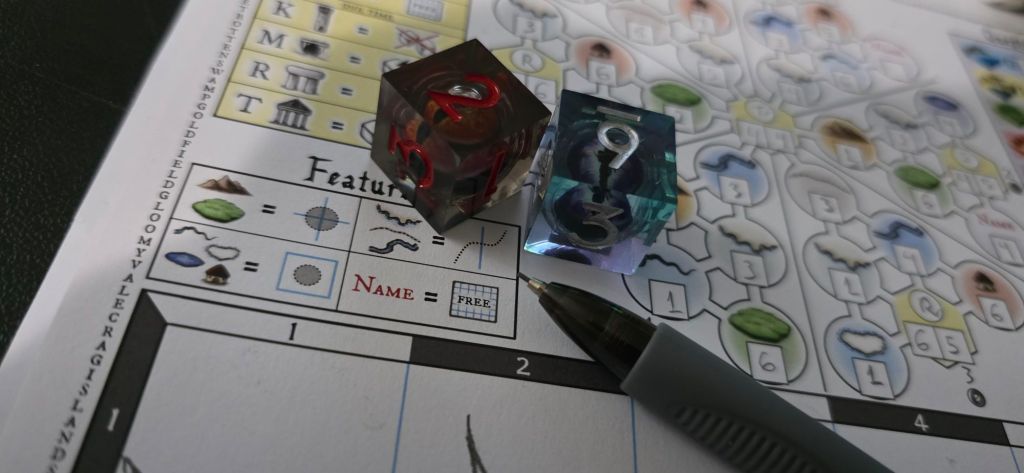
In Fantasy Map Maker, each game will have 5 goals related to various aspects of the map. Each turn two dice are rolled, one will select which wedge of features are available, and the other the size of the feature.

Features come in 3 basic types, each with basic restrictions on how to be drawn. Big features cover intersections, long features cross vertical lines, small features individually need to be in the same square, but can be spread. There are also features that are drawn according to coordinates, and give you special abilities.

Each type of quest awards points for how the features are drawn and interact, and the player loses points for map errors, such as rivers starting from nowhere, incomplete shorelines and similar issues.

Featuring: Features

Like a Geographic Cheese

The thing I enjoy about the most about Fantasy Map Maker is the artistic liberty. As long as you keep simple guidelines, your map is your own. You can have skinny mountain ranges or huge crags, dinky little streams of rivers so large they can house islands. Even if you’re being strategic and thinking just about the points, there is still a lot of room for creativity.

The wedge of features system is really interesting. You need to balance what you use to have more opportunities open, while still thinking about the numbers you associate with each feature. Space is limited, so if you care about forests, you need to be putting on small mountains for example.

The Improved Edition

Big Cards Big Games!

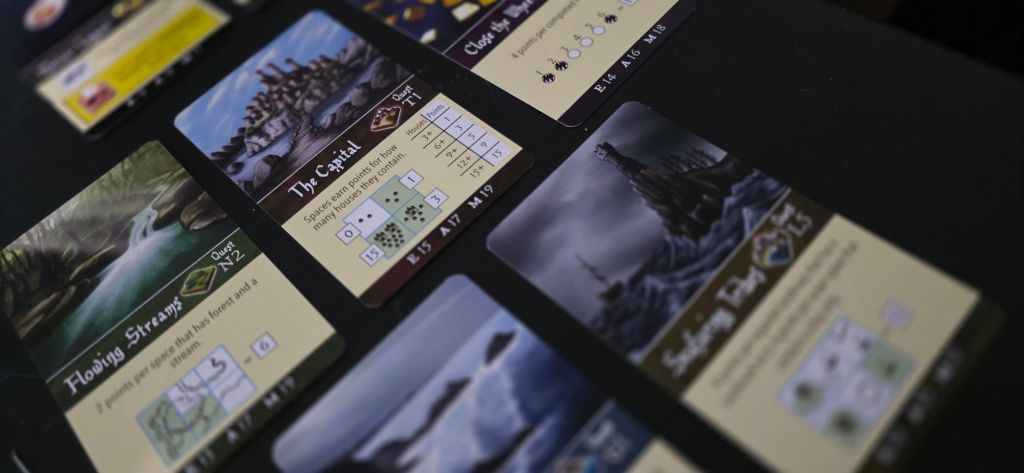
This improved edition changes little of the gameplay, but it adds so much in terms of quality. First, the obvious one, big tarot sized cards for the quests and events. The art is gorgeous, the layout is clear and the examples drive the point home.

But just as good are the sheets. The layout is the same, but now each sheet has an unique configuration of the wedge, giving each game its our structure and strategy.

Epic, Once Again

Get Ready for Cartography (no, not that one)

Fantasy Map Maker keeps its place in one of my favorite print and plays of recent years. It’s clever, but yet so approachable. You can bring this out to any group and I think it’s going to be a hit, specially if they have this artistic itch.

But, artistry is not necessary. I mean, I’m awful at drawing, but I still get to look at my finished sheets and see not only a fun game I played, but this fragment of a world I want to be part of.

The boxed edition will be on crowdfunding on February 1st. Don’t miss it!

Review

Let’s Review More: Shred of Redemption

1 Player

Designer: Artem Safarov

Artist: Cole Munro-Chitty

Publisher: Best With 1 Games

Shred of Redemption tells the tale of a knight who long lost his way and got corrupt, only to look back and try to atone for his acts and end his life in righteousness. But does this game have too many wins or are its virtues enough to rise above?

How to Play

Virtues like Doves and Hammers

To setup, draw one vice die from the bag, without rolling it and set aside. Each dice have 3 faces of its main vice, and a combination of other 3. After that, draw two cards, picking one and discarding the other. Each card gives you a one time ability, as well adding some virtue tokens to the bag. Repeat this 4 more times, then use the cards to populate the token bag, and only the roll each die in order.

You start the game with 5 tokens from the bag, which are a mix of virtue and regret. The goal is to have the token underneath each vice dice to be its corresponding virtue token, and no regrets in the line.

You do that by using tokens and cards to manipulate the row. Each virtue has an effect when you use it, like swapping cards and dice, discarding regrets or drawing more tokens. Each card has one unique effect you can discard it to use or they can be used to draw more tokens too.

If you manage to reach the wining position, you still have one final trial to face that will mess up your position. Reach the wining position again and you win.

Rules and Components

Hexes beat Cubes

The rules of the game are fairly short, but well illustrated and organized, with good structure and flow. I was able to understand the game on the first read and very little issues. There are a few points that are left implied, but nothing critical.

The dice are a bit small, but functional and clear enough. The faces are visible and distinguished from one to the other at a glance.

The tokens on the other hand are quite large, which is great for visualization and manipulation. However, the draw bag is quite small, and thus shuffling the tokens inside is a pain. Honestly, if possible get a bigger bag.

The color usage is a big miss. It’s so easy to get the colors mixed and more unique choices could have been used. Color is never a critical information, though, the symbols are, so this is not game breaker.

Score: 7.5/10

Gameplay

Treat your tokens with Kindness

This is an interesting puzzle like a Rubik’s Cube. You have 5 dice to fulfill, and you need to analyze what needs to done a few steps advance so all fall in place in the same time.

You also need to understand well the contents of the bag and probability. Since the seeding is varied, some abilities will be more common than others. Drawing is often necessary, but almost always comes with the risk of Regret, and you have to be ready.

Efficiency is always important, as there is the reckoning that will wreck your well laid plans and you have to have wiggle room. Without it, the game could feel a bit too trivial, but that adds just the right amount of challenge without adding too much playtime.

Score: 8.5/10

Theme and Art

He Had Monopoly in his Collection

I think the theme is fascinating. It’s all about this unknown figure that led a life of sin and darkness trying to find the Redemption at its end, with time running out. It’s well punctuated not only with card names, but the gameplay feels like a reflection.

That is helped by a beautiful artwork on each illustration, and even the iconography supports well and keeps the somber and melancholic tone. It all ties well and tells a story with relatively few words.

Score: 9.5/10

Conclusion

Let me get one thing out of the way. I’m so glad to have this game. After the whole chaos and everything terrible surrounding Unbroken and The-Company-That-Shall-Not-Be-Named, I was afraid that Artem would not be able to rise above, and I feel he was just a honest designer caught in a bad situation. So, in a big way, Redemption is fair for his journey.

That being said, this is a really good game. It’s quick to setup and play, but there is a lot here. And because of the combination the cards and dice, each game is a very unique puzzle and will offer very unique style of solutions.
Score: 8.5/10